
The Greening Law Group represents individuals in College Station, Texas, who often encounter increased law enforcement activity during the summer months, especially around major holidays when travel, celebrations, and roadway congestion all rise at the same time. During this period, DWI enforcement activity becomes noticeably more visible across Texas highways and local roads, and drivers frequently experience more stops, more patrol presence, and more targeted enforcement operations focused on impaired driving. These efforts are not random but are instead driven by historical data showing that holiday weekends consistently produce higher rates of alcohol-related crashes and arrests, which leads agencies to allocate additional personnel and resources during these specific timeframes.






Summer holidays such as Memorial Day, Independence Day, and Labor Day are particularly significant because they combine increased alcohol consumption with extended travel periods. In College Station and surrounding areas, this often results in heightened patrol saturation on major routes leading into and out of the city, as well as increased enforcement in entertainment districts and near large gatherings. Understanding how and why this enforcement increases helps drivers recognize the legal environment they are operating within and also highlights how quickly a routine stop can escalate into a criminal investigation when impairment is suspected.
Why Summer Holidays Increase DWI Enforcement in Texas 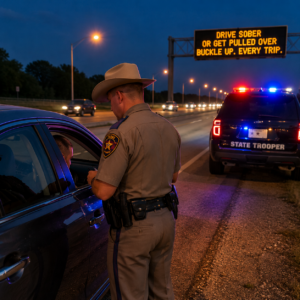
Texas law enforcement agencies rely heavily on statistical trends when determining patrol strategy, and summer holiday periods consistently show a rise in impaired driving incidents. This is influenced by a combination of factors including longer daylight hours that extend social activity, increased tourism and travel across interstate highways, and a greater number of social events where alcohol is commonly consumed. As a result, agencies often schedule overtime shifts, special task force deployments, and coordinated operations between city police departments, county sheriff offices, and state troopers.
In College Station, this trend is amplified by the presence of Texas A&M University events, regional festivals, and seasonal travel patterns that bring additional traffic into the area. Officers may position themselves along high-traffic corridors, near popular nightlife areas, and along major exit routes where impaired driving incidents are statistically more likely to occur. While these enforcement efforts are intended to improve roadway safety, they also increase the likelihood that drivers will be stopped for minor traffic violations that lead to deeper investigation.
Drivers navigating these periods should understand that enforcement does not require visible checkpoints to be effective. Instead, officers often rely on proactive traffic enforcement, meaning that even small driving errors such as drifting between lanes, failing to signal, or slightly exceeding speed limits may result in a stop that evolves into a DWI investigation if impairment is suspected.
When you hire our team, you’re not just getting experience. You’re getting people who care. We work hard on every case because we know it matters to you. And we’ll treat your case like it’s the only one that matters. That’s how we’ve stood out from the rest.
A Legal Team You Can Count On
What Drivers Experience During Holiday Enforcement Periods
During summer holiday weekends, drivers in College Station and throughout Texas often notice a significant increase in patrol visibility and traffic stops. This is particularly common during nighttime hours when alcohol consumption is more prevalent. Officers may focus on identifying behavioral indicators of impairment such as inconsistent speed, delayed reaction times, or improper lane positioning. Once a stop is initiated, the scope of the encounter can expand quickly depending on the officer’s observations.
It is also common for officers to request field sobriety tests during these stops, especially if they believe there are signs of impairment. These tests are highly subjective and can be influenced by a variety of external factors including road conditions, weather, fatigue, or nervousness. For a deeper understanding of how these evaluations are used in Texas cases, reviewing resources such as https://www.craiggreeninglaw.com/blog/field-sobriety-tests-in-texas-dwi-cases-understanding-their-accuracy can provide valuable context. Similarly, chemical testing through breath or blood analysis may also be requested, and the reliability of these tests is frequently a central issue in DWI defense strategies, as discussed at https://www.craiggreeninglaw.com/blog/are-dwi-blood-tests-reliable.
Highly Recommend Craig Greening. Craig is personable and cultivated, you will feel confident next to him! Worth every penny, he is a superlative attorney. Don't rush the process, getting the deal you want takes time! Mike D. I just want to say how amazing your firm is. You guys know exactly what you are doing and have helped me out tremendously. Thank you so much for everything you have done and continue to do. David B. Maddie was polite, professional and very helpful. The group was expedient in responding to requests and I feel I'm in good hands. Thanks guys! Gently E.
Patrol Strategies and Legal Context Behind Enforcement
Law enforcement agencies do not rely solely on observation when building a DWI case. Instead, they combine multiple forms of evidence including officer testimony, roadside observations, standardized testing procedures, and chemical analysis results. During summer holiday periods, these procedures are often applied more frequently due to the increased number of traffic stops occurring within short timeframes.
In many cases, officers are trained to look for a combination of driving behavior indicators and physical signs such as bloodshot eyes, odor of alcohol, or slowed speech patterns. However, these observations are subjective and can be challenged in court depending on the circumstances of the stop and the quality of the evidence collected. Legal issues such as probable cause for the stop and proper administration of testing procedures often become central points of analysis in defense preparation.
Understanding how Texas law interprets impairment is also essential. The relationship between blood alcohol concentration levels and legal penalties is not always straightforward, and small variations in results or testing procedures can significantly impact case outcomes. More information on this relationship can be found at https://www.craiggreeninglaw.com/blog/the-link-between-bac-and-dwi-penalties-what-you-need-to-know.
Consequences and Case Development in Holiday Arrests
When arrests occur during summer holiday enforcement periods, the resulting cases often move quickly through the legal system due to the volume of arrests being processed. Individuals may face license suspension, court appearances, and potential long-term consequences depending on the severity of the allegations and prior record. However, each case must be evaluated based on its own facts, including whether law enforcement followed proper procedures during the stop, testing, and arrest process.
In some situations, additional charges or complications may arise, particularly if there are issues such as an open container in the vehicle or other related violations. Texas open container laws can significantly affect how a case is evaluated, as explained at https://www.craiggreeninglaw.com/blog/understanding-texas-open-container-law. Drivers may also face immediate concerns regarding their ability to continue driving to work or school, which is where occupational licensing becomes relevant, as outlined at https://www.craiggreeninglaw.com/blog/occupational-drivers-license-odl-guide.
Defense Strategies in DWI Cases
Defense strategies in DWI cases arising from summer holiday enforcement often focus on identifying weaknesses in the stop, investigation, and testing process. One of the most common areas of review involves whether the initial traffic stop was legally justified. Without proper justification, any evidence collected afterward may be subject to challenge. Another key area involves the administration and interpretation of field sobriety tests, which are not foolproof indicators of impairment.
Chemical testing procedures are also closely examined, including how samples were collected, stored, and analyzed. Even small procedural errors can affect the reliability of results. In many cases, a thorough review of officer reports, body camera footage, and testing records can reveal inconsistencies that may be relevant to the defense strategy.
Legal representation plays a critical role in identifying these issues early and ensuring that constitutional rights are protected throughout the process. Each case is fact-specific, and outcomes often depend on the quality of evidence and the effectiveness of the legal response.
Importance of Legal Representation in College Station
In College Station, enforcement intensity during summer holidays can create a heightened risk environment for drivers, even those who are not impaired. A routine stop can escalate quickly, and the legal consequences of a DWI charge can be significant. The Greening Law Group works with individuals to evaluate the circumstances of their arrest, challenge improper procedures, and build a structured defense based on the facts of the case.
Early legal intervention can make a substantial difference in how a case develops, particularly when evidence must be preserved and reviewed promptly. Understanding the enforcement landscape during summer holidays helps drivers make informed decisions and respond appropriately if they are stopped or charged.
Texas does increase DWI patrols during summer holidays, and this trend is especially visible in College Station where travel, events, and seasonal activity all contribute to higher enforcement presence. While these efforts are designed to improve roadway safety, they also lead to a greater number of stops and arrests that require careful legal review. Knowing how enforcement operates and what rights apply during these encounters is essential for anyone driving during these high-activity periods.
This information is for educational purposes only and does not constitute legal advice. Individuals facing DWI allegations should consult an attorney regarding their specific situation.

|
|
|