
An arrest during a College Station football weekend can lead to booking, a magistrate hearing, bond conditions, court deadlines, and possible university conduct concerns for students. Common game-day allegations include DWI, public intoxication, assault, drug possession, underage alcohol offenses, and identification-related charges.
Texas law requires an arrested person to be taken before a magistrate without unnecessary delay and no later than 48 hours after the arrest. A DWI arrest may also trigger a separate administrative driver’s license process. Depending on the circumstances, you may have only 15 days after receiving notice of suspension to request a hearing.
The Greening Law Group helps people facing criminal charges in College Station, Texas, understand what comes next, identify deadlines, preserve evidence, and respond to the criminal case while protecting their rights.






Why College Station Football Weekends Can Create Complicated Arrest Situations 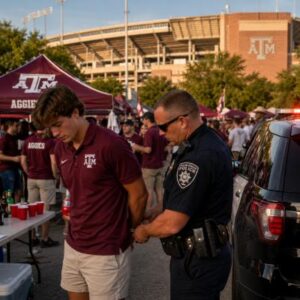
A Texas A&M football weekend changes the normal rhythm of College Station. Large crowds, tailgates, busy parking areas, rideshare traffic, pedestrians, and late-night activity can increase encounters between police and students, residents, and visitors.
An incident that begins as a traffic stop, welfare check, noise complaint, argument, or alcohol-related call can lead to detention or arrest.
Game-day conditions can also affect the evidence. Heavy traffic may influence how driving appears from a patrol vehicle. Crowded sidewalks and parking areas can make witness accounts difficult to evaluate. Temporary traffic controls, unfamiliar routes, and groups moving between events can make reconstructing an incident more complicated.
Those circumstances do not remove the State’s burden of proof. An arrest is an accusation, not a conviction.
What Happens After an Arrest in College Station?
After an arrest, officers generally transport you to a detention facility for booking. Booking may include collecting identifying information, fingerprints, photographs, an inventory of personal property, and information about the alleged charge.
Texas Code of Criminal Procedure Article 15.17 requires an arrested person to be taken before a magistrate without unnecessary delay and no later than 48 hours after the arrest.
During the magistrate appearance, the magistrate must provide required warnings, including information about the accusation, the right to remain silent, the right to retain counsel, and the right to request appointed counsel when applicable. The magistrate may also address bail and release conditions.
A busy football weekend can mean that many people are moving through local law enforcement and court systems. Your legal rights and applicable deadlines still remain in effect.
When you hire our team, you’re not just getting experience. You’re getting people who care. We work hard on every case because we know it matters to you. And we’ll treat your case like it’s the only one that matters. That’s how we’ve stood out from the rest.
A Legal Team You Can Count On
Bond Conditions May Continue After Release
Getting out of jail does not end the criminal case. A judge or magistrate may impose conditions that remain in effect while your charge is pending.
Depending on the allegations and circumstances, bond conditions may address:
- Alcohol or drug use
• Driving
• Contact with an alleged victim
• Travel
• Drug or alcohol testing
• Ignition interlock requirements
• Curfews
• Reporting requirements
Read every release document carefully and comply with every condition that applies to you. A violation of a bond condition can create additional legal problems while the original charge remains pending.
Common Football-Weekend Charges in College Station
Football weekends can result in several types of criminal allegations. The exact charge depends on what officers believe occurred and the evidence available.
DWI
Texas Penal Code Section 49.04 makes it an offense to operate a motor vehicle in a public place while intoxicated.
Texas law defines intoxication as not having the normal use of mental or physical faculties because of alcohol, a controlled substance, a drug, a dangerous drug, a combination of substances, or another substance. The definition also includes having an alcohol concentration of 0.08 or more.
A first DWI is generally a Class B misdemeanor. The classification and possible punishment can change depending on the facts. Prior DWI convictions, an alcohol concentration of 0.15 or higher, a child passenger, injury, or other circumstances can increase the seriousness of the case.
You can learn more about College Station DWI defense here:
https://www.craiggreeninglaw.com/college-station-dwi-lawyer/
Highly Recommend Craig Greening. Craig is personable and cultivated, you will feel confident next to him! Worth every penny, he is a superlative attorney. Don't rush the process, getting the deal you want takes time! Mike D. I just want to say how amazing your firm is. You guys know exactly what you are doing and have helped me out tremendously. Thank you so much for everything you have done and continue to do. David B. Maddie was polite, professional and very helpful. The group was expedient in responding to requests and I feel I'm in good hands. Thanks guys! Gently E.
Public Intoxication
Texas Penal Code Section 49.02 provides that a person commits public intoxication when the person appears in a public place while intoxicated to the degree that the person may endanger the person or another person.
Public intoxication is generally a Class C misdemeanor.
The issue is not simply whether you consumed alcohol. The State must prove the elements required by the statute. Being loud, emotional, tired, or unsteady does not by itself establish every element of public intoxication.
Learn more about public intoxication charges in College Station here:
https://www.craiggreeninglaw.com/college-station-public-intoxication-lawyer/
Assault and Disorder-Related Allegations
Crowded gatherings can lead to arguments, physical contact, misunderstandings, and conflicting witness accounts. An assault allegation may involve questions about whether physical contact occurred, whether the conduct was intentional or reckless, whether self-defense applies, and whether video or witness evidence supports the allegations.
Learn more about College Station assault defense here:
https://www.craiggreeninglaw.com/college-station-assault-lawyer/
Drug Possession and Student Alcohol Offenses
A football-weekend encounter can also lead to allegations involving marijuana, controlled substances, minor in possession, consumption of alcohol by a minor, false identification, or furnishing alcohol to a minor.
For a student, a criminal case may not be the only concern. Texas A&M University may have a separate student conduct process. University proceedings can involve different procedures, standards, and deadlines from the criminal case.
Learn more about criminal defense for College Station students here:
https://www.craiggreeninglaw.com/college-station-student-defense-lawyer/
A DWI Arrest Can Start a Separate Driver’s License Case
A Texas DWI arrest may involve two separate matters: the criminal case and an administrative driver’s license proceeding.
Depending on the circumstances surrounding the arrest and chemical testing, Texas law may allow only 15 days after you receive notice of suspension to request an Administrative License Revocation hearing.
The deadline is tied to receiving notice, not simply to the date when you first appear in criminal court. In many cases, notice is provided around the time of the arrest or release.
That means the administrative deadline can arrive while you are still waiting for police video, laboratory results, reports, or your first criminal court setting.
A DWI arrest can create a driver’s license deadline long before the criminal case is resolved. Check your paperwork immediately after release.
For more information about practical steps following a DWI arrest, visit:
https://www.craiggreeninglaw.com/blog/what-to-do-after-a-dwi-arrest/
What Should You Say After an Arrest?
You should comply with lawful instructions and provide identifying information when legally required, but you do not have to provide a detailed explanation of the incident.
Statements made after an arrest may become evidence. Stress, fatigue, alcohol, confusion, or a desire to explain what happened can cause people to guess about times, distances, conversations, or events they do not remember clearly.
You may clearly state that you wish to remain silent and want an attorney. You can make that request calmly without arguing with officers.
What Evidence May Matter After a Football-Weekend Arrest?
The police report may be only one part of the evidence. Football-weekend cases can involve video, electronic records, witnesses, receipts, and other information that helps establish what happened.
Potential evidence may include:
- Body-camera video
• Dash-camera video
• Stadium-area surveillance
• Business surveillance
• Apartment or parking-lot surveillance
• Rideshare records
• Parking receipts
• Restaurant or bar receipts
• Text messages
• Phone location information
• Photographs or videos taken by friends or witnesses
• Witness names and contact information
• 911 calls
• Dispatch records
• Breath-testing records in a DWI case
• Blood-testing and laboratory records in a DWI case
Some evidence may become unavailable with time. A business may overwrite surveillance footage, witnesses may leave College Station after the game, and certain electronic records can become more difficult to obtain.
Preserving potentially relevant information early can help your attorney develop a clearer picture of what occurred.
What Should You Do After Release?
The period immediately after release can be useful for preserving documents, identifying deadlines, and recording information while your memory is fresh.
- Keep your bond papers, property receipts, license notices, citations, and court documents.
- Write a private timeline of what happened before, during, and after the arrest.
- Save photographs, videos, messages, rideshare records, receipts, and witness contact information.
- Avoid posting information about the incident on social media.
- Follow every bond condition and court instruction.
- If your case involves DWI, review your driver’s license paperwork and applicable hearing deadline immediately.
- If you are a student, open and preserve any university notices you receive.
- Speak with a criminal defense lawyer before providing detailed statements about the incident.
How Can a College Station Criminal Defense Lawyer Help?
A criminal defense lawyer can review the arrest from the beginning rather than relying solely on the police report.
Depending on your case, that review may address:
- The legal basis for the traffic stop or detention
• Probable cause for the arrest
• Search and seizure issues
• Statements made before or after the arrest
• Witness credibility
• Body-camera or dash-camera recordings
• Surveillance footage
• Breath or blood testing procedures
• Laboratory records
• Differences between written reports and recordings
• Bond conditions
• Driver’s license deadlines
• Court deadlines
Your lawyer can also identify evidence that should be requested or preserved and explain the stages of the criminal process.
When you are a college student, your attorney can help you understand how the criminal case and a separate university conduct matter may interact.
No attorney can promise a dismissal, reduction, acquittal, or other particular result. Your options depend on the allegations, evidence, prior history, applicable law, court rulings, and facts of your individual case.
Learn more about criminal defense representation in College Station here:
https://www.craiggreeninglaw.com/college-station-criminal-defense-lawyer/
Speak With The Greening Law Group After a College Station Football-Weekend Arrest
A football-weekend arrest can affect your transportation, education, work, family responsibilities, and future. You do not need to make decisions about a criminal charge without understanding what the allegations, deadlines, and evidence mean for your situation.
The Greening Law Group represents people facing criminal and DWI allegations in College Station, Texas, and nearby areas. Craig Greening is a former prosecutor and a Board Certified Specialist in Criminal Law. The firm can review your charge, identify time-sensitive issues, examine available evidence, and explain the legal options that may apply to your case.
Call The Greening Law Group at 979-773-7010 to request a consultation.
tel:+19797737010
You can also contact the firm here:
https://www.craiggreeninglaw.com/contact-us/
This article is for informational purposes only and is not legal advice. Consult an attorney about your specific circumstances.

|
|
|