
Texas DWI law can raise unusual questions when alcohol is involved and you are riding a bicycle, electric bicycle, or motor-assisted scooter instead of driving a car. Texas Penal Code Section 49.04 applies when a person is intoxicated while operating a motor vehicle in a public place. Chapter 49 does not use the everyday meaning of “motor vehicle.” It incorporates a broad definition from Texas Penal Code Section 32.34.
For College Station riders, the safest legal answer is that the result can depend on the device and the facts. Texas appellate courts have not supplied a simple rule stating that every traditional bicycle is, or is not, a motor vehicle for every Chapter 49 purpose. Electric bicycles and motor-assisted scooters can raise separate classification questions because Texas transportation laws treat those devices differently from ordinary motor vehicles.
If you have been accused of DWI, public intoxication, or another alcohol-related offense after riding a bicycle, e-bike, or scooter, the device, location, police observations, and charging theory should all be reviewed carefully.
Learn more about DWI defense in College Station:
https://www.craiggreeninglaw.com/college-station-dwi-lawyer/







Can You Get a DWI on a Bicycle in Texas?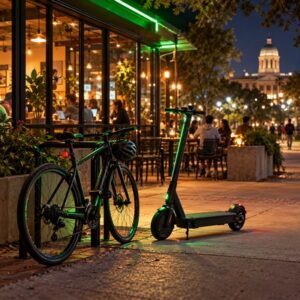
Texas law does not provide a simple one-word answer for every bicycle case.
Under Texas Penal Code Section 49.04, DWI requires proof that a person was intoxicated while operating a motor vehicle in a public place. Texas Penal Code Section 49.01 states that “motor vehicle” has the meaning assigned by Section 32.34(a).
Section 32.34 defines a motor vehicle as a device in, on, or by which a person or property is or may be transported or drawn on a highway, except for a device used exclusively on stationary rails or tracks.
That language is broad. It does not expressly say that the device must have an engine or motor.
A 2025 Texas appellate opinion addressed a related open-container dispute involving a bicycle. The court noted that it had found no Texas case deciding whether a bicycle qualifies as a motor vehicle for the open-container statute. That statute uses the same Chapter 49 definition of motor vehicle. The court did not decide the bicycle classification question because the case could be resolved on other grounds.
That means a rider should be cautious about broad claims that a traditional bicycle can never fall within the Chapter 49 definition. At the same time, the statutory wording does not mean that every bicycle case automatically supports a DWI charge.
Traditional Pedal Bicycles Can Create a Classification Dispute
A traditional bicycle is powered by the rider, not by an engine. Texas Transportation Code definitions often distinguish bicycles from motor vehicles, but the DWI statute relies on the separate Penal Code definition described above.
In a case involving a pedal bicycle, a defense lawyer may examine:
- The exact device involved
- Whether the State is alleging DWI, public intoxication, or another offense
- The statutory definition used in the charging theory
- Where the bicycle was operated
- Whether the State can prove operation
- Whether the location qualifies as a public place
- Whether the officer had lawful grounds to stop or detain the rider
- Whether the evidence supports the claimed level of intoxication
The classification question can matter, but it is only one part of the case.

A Legal Team You Can Count On
When you hire our team, you’re not just getting experience. You’re getting people who care. We work hard on every case because we know it matters to you. And we’ll treat your case like it’s the only one that matters. That’s how we’ve stood out from the rest.
About UsWhat About an Electric Bicycle?
Texas law separately defines electric bicycles. Under the Transportation Code, an electric bicycle generally has fully operable pedals, an electric motor of fewer than 750 watts, and a top assisted speed of 28 miles per hour or less. Texas law also divides qualifying electric bicycles into Class 1, Class 2, and Class 3 categories based on how the motor assists the rider and the bicycle’s assisted speed.
Those transportation classifications can help identify the device, but they do not by themselves answer every question under Texas Penal Code Chapter 49.
If an arrest involves an e-bike, evidence about the specific bicycle may matter, including:
- Manufacturer and model
- Motor wattage
- Class 1, Class 2, or Class 3 designation
- Whether the bicycle has a throttle
- Whether the motor operates without pedaling
- Maximum assisted speed
- Photographs or video of the device
- Rental or purchase records
- Data showing how the bicycle was being operated
A lawyer can compare those facts with the statute prosecutors are using and determine which classification arguments apply.
Can You Get a DWI on an Electric Scooter in Texas?
An electric scooter can raise a separate set of legal questions.
Texas Transportation Code Section 551.351 defines a motor-assisted scooter using specific features. The statutory definition includes a self-propelled device with at least two wheels, a braking system, a qualifying motor, a deck that allows a person to stand or sit, and the ability to be propelled by human power alone.
Texas Transportation Code Section 551.352 also provides that certain Transportation Code provisions applicable to motor vehicles do not apply to motor-assisted scooters.
That transportation rule does not automatically decide a DWI case. Texas Penal Code Chapter 49 uses its own incorporated definition of motor vehicle. The State’s charging theory, the scooter’s design, and the facts of the ride can all affect the analysis.
If police arrested you while you were using a rented or privately owned electric scooter, preserve information that identifies the exact scooter. A model name, rental receipt, application record, or photograph can help establish what type of device was involved.

Highly Recommend Craig Greening. Craig is personable and cultivated, you will feel confident next to him! Worth every penny, he is a superlative attorney. Don't rush the process, getting the deal you want takes time!
Mike D.
I just want to say how amazing your firm is. You guys know exactly what you are doing and have helped me out tremendously. Thank you so much for everything you have done and continue to do.
David B.
Maddie was polite, professional and very helpful. The group was expedient in responding to requests and I feel I'm in good hands.
Thanks guys!
Gently E.
What Does “Intoxicated” Mean Under Texas Law?
Texas Penal Code Section 49.01 provides two main ways the State may try to establish intoxication.
A person can be considered intoxicated if the person does not have the normal use of mental or physical faculties because of alcohol, a controlled substance, a drug, a dangerous drug, a combination of substances, or another substance.
A person can also be considered intoxicated if the person has an alcohol concentration of 0.08 or more.
A breath or blood result at or above 0.08 is not the only theory available to prosecutors. Evidence may include:
- Riding behavior
- Balance and coordination
- Statements made to an officer
- Body-camera footage
- Field sobriety testing
- Breath testing
- Blood testing
- Witness observations
- Video from nearby businesses or residences
Each type of evidence can be reviewed for reliability, context, and legal admissibility.
Can Public Intoxication Apply to a Bicycle or Scooter Rider?
Yes. A bicycle or scooter encounter can result in a public intoxication allegation even when a DWI charge is disputed.
Texas Penal Code Section 49.02 provides that a person commits public intoxication if the person appears in a public place while intoxicated to the degree that the person may endanger the person or another.
Public intoxication and DWI have different elements. DWI requires operation of a motor vehicle in a public place. Public intoxication focuses on appearing in a public place while intoxicated to a degree that may create danger.
A disagreement about whether a bicycle or scooter qualifies as a motor vehicle does not automatically resolve a possible public intoxication allegation.
What Counts as a Public Place in a Texas DWI Case?
The location of the alleged conduct matters because Texas Penal Code Section 49.04 requires operation in a public place.
Texas law defines “public place” broadly for Chapter 49. The definition includes a place to which the public or a substantial group of the public has access. Streets and highways are common examples, but the statutory definition can also cover other areas depending on public access.
In a bicycle or scooter case, a lawyer may review:
- Where the rider was first observed
- Where the rider traveled
- Where police initiated contact
- Whether the route included a street, roadway, parking area, or other accessible location
- Whether surveillance video confirms the route
- Whether scooter application or GPS records identify the trip
- Whether the State can connect the alleged operation to a public place
The place where police finally contacted the rider is not always the only location that matters.
What Evidence Can Matter in a Bicycle or Scooter DWI Case?
The device itself can become a key piece of evidence. Digital records can also matter more in a scooter or rental e-bike case than they do in many traditional vehicle cases.
Potential evidence includes:
- Police body-camera video
- Dash-camera video
- Nearby surveillance recordings
- Scooter or e-bike rental history
- Application data
- GPS or trip records
- Photographs of the bicycle or scooter
- Manufacturer specifications
- Product labels showing e-bike class or motor wattage
- Witness statements
- Breath or blood testing records
- Medical records when legally relevant
- Police reports
- Officer notes
- Road, weather, and lighting conditions
Rental records may help establish when a device was activated, how long a trip lasted, and where the device traveled. Video may show whether the rider was actually operating the device and how the ride occurred.
Digital data and surveillance recordings may be deleted or overwritten after a period of time. Preserving relevant information early can protect evidence that may later matter.
What Should You Do After an Arrest or Citation?
If you are accused of DWI, public intoxication, or another alcohol-related offense involving a bicycle or scooter, keep the records connected with the incident.
Preserve:
- Court documents
- Bond paperwork
- Citations
- Property receipts
- Rental receipts
- Scooter or e-bike application records
- Screenshots of trip history
- Photographs
- Text messages related to the incident
- Witness names and contact information
Do not delete relevant electronic records.
You can also prepare a private timeline for your attorney while the events are fresh in your memory. Record where you were, when you began riding, the route you took, where police contacted you, what officers asked, what you said, and whether any field, breath, or blood testing occurred.
Avoid posting details about the case on social media. Public posts can create evidence that prosecutors may attempt to use.
How a College Station DWI Attorney Can Evaluate the Case
A bicycle, e-bike, or scooter DWI investigation can involve several legal and factual questions at once.
A defense attorney may examine whether:
- The device falls within the statutory definition relied on by the State
- The State can prove that you operated the device
- The alleged operation occurred in a public place
- Police had lawful grounds for the stop or detention
- Statements were lawfully obtained
- Field sobriety evidence is reliable under the circumstances
- Breath or blood evidence was lawfully obtained and properly analyzed
- Video supports or conflicts with the police report
- Rental or GPS data supports or conflicts with the State’s timeline
The Greening Law Group handles DWI and alcohol-related criminal matters in College Station and other Texas communities. More information about the firm’s DWI practice is available here:
https://www.craiggreeninglaw.com/college-station-dwi-lawyer/
Texas DWI information is also available here:
https://www.craiggreeninglaw.com/texas-dwi-lawyer/
Speak With a College Station DWI Attorney
If you were arrested or cited after riding a bicycle, e-bike, or electric scooter in College Station, the device and the facts should be reviewed before conclusions are drawn about the charge.
The Greening Law Group can examine the classification of the bicycle or scooter, the location, the police encounter, intoxication evidence, testing procedures, video, and digital records connected with the incident.
Contact The Greening Law Group online:
You can also contact the firm here:
https://www.craiggreeninglaw.com/contact-us/
This article is for informational purposes only and is not legal advice. The application of Texas law depends on the facts of each case.

|
|
|