
Yes. You can be arrested or charged with DWI in Texas after police find you asleep in a parked car. The central question is whether the state can prove that you were intoxicated while operating a motor vehicle in a public place.
The vehicle does not have to be moving when an officer arrives. Texas courts interpret “operating” more broadly than driving. Courts examine the totality of the circumstances to decide whether your actions affected the vehicle’s functioning in a way that enabled its use.
In a College Station sleeping-in-the-car DWI case, details such as where the vehicle was parked, whether the engine was running, where the keys were located, where you were sitting, what you told the officer, and whether evidence shows recent driving can become significant. Sleeping instead of driving away does not automatically prevent a DWI charge, but being asleep in a parked vehicle does not automatically prove DWI either.







Why Can Sleeping in a Parked Car Lead to a DWI Charge? 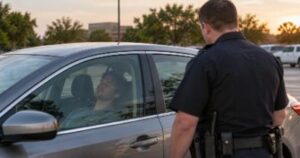
Texas Penal Code Section 49.04 states that a person commits DWI when the person is intoxicated while operating a motor vehicle in a public place.
Texas Penal Code Section 49.01 defines intoxication in two ways:
- Not having the normal use of mental or physical faculties because of alcohol, a controlled substance, a drug, a dangerous drug, a combination of substances, or another substance introduced into the body
- Having an alcohol concentration of 0.08 or more
The disputed issue in many sleeping-driver cases is whether the person was “operating” the vehicle.
Texas law does not require the state to prove that an officer personally saw the vehicle moving. Courts have held that driving is one form of operation, but operation can also include conduct that affects a vehicle’s functioning and enables its use.
Prosecutors must still prove every required element beyond a reasonable doubt. If the evidence of operation is weak, disputed, or based mainly on assumptions, that issue may become a central part of the defense.
What Does “Operating” a Vehicle Mean in Texas?
Texas courts look at the totality of the circumstances when deciding whether the evidence supports a finding that a person operated a motor vehicle.
The Texas Court of Criminal Appeals has explained that operation involves taking action that affects the functioning of a vehicle in a way that enables its use. A vehicle does not need to travel a measurable distance for operation to become an issue.
Facts that have supported operation findings in Texas cases include:
- Sleeping or being unconscious in the driver’s seat while the engine is running
- A vehicle stopped in a traffic lane
- Headlights or other vehicle systems being on
- A transmission left in drive or another gear
- A foot positioned on the brake
- Unusual or unsafe vehicle positioning
- Statements admitting recent driving
- Witness or video evidence showing earlier vehicle movement
The surrounding facts can also support a defense. Courts have recognized that an intoxicated person sitting or sleeping in a legally parked vehicle does not always establish operation without additional evidence connecting that person to driving or other operation of the vehicle.
A person asleep in a reclined seat with the vehicle legally parked, the transmission in park, and little evidence of recent driving presents different facts from a person found unconscious in a travel lane with the engine running.
For more information about how these cases are evaluated, visit:
https://www.craiggreeninglaw.com/college-station-dwi-lawyer/
When you hire our team, you’re not just getting experience. You’re getting people who care. We work hard on every case because we know it matters to you. And we’ll treat your case like it’s the only one that matters. That’s how we’ve stood out from the rest.
A Legal Team You Can Count On
Facts That May Matter When Police Find You Sleeping
A sleeping-in-the-car DWI investigation often depends on circumstantial evidence. Officers and prosecutors may consider several facts together, including:
- Whether you were in the driver’s seat, passenger seat, or back seat
- Whether the engine was running
- Whether the headlights, air conditioning, radio, or other vehicle systems were operating
- Where the keys were located
- Whether the transmission was in park, neutral, drive, or another position
- Whether the vehicle was legally parked
- Whether the vehicle was in or near a traffic lane
- Whether a witness saw you drive
- Whether surveillance footage, dash-camera footage, or other video shows recent driving
- Whether you made statements about how you arrived
- Whether alcohol containers were found
- Whether physical evidence suggests recent vehicle movement
- Whether breath or blood testing can be connected to the time of alleged operation
No single fact necessarily decides the case.
A defense lawyer may compare the officer’s report with body-camera footage, dispatch records, witness accounts, photographs, surveillance footage, breath or blood testing records, and other evidence to determine whether the state can prove operation and intoxication at the same relevant time.
Highly Recommend Craig Greening. Craig is personable and cultivated, you will feel confident next to him! Worth every penny, he is a superlative attorney. Don't rush the process, getting the deal you want takes time! Mike D. I just want to say how amazing your firm is. You guys know exactly what you are doing and have helped me out tremendously. Thank you so much for everything you have done and continue to do. David B. Maddie was polite, professional and very helpful. The group was expedient in responding to requests and I feel I'm in good hands. Thanks guys! Gently E.
Does the Location of the Car Matter?
Yes. Texas DWI law requires operation of a motor vehicle in a public place.
Texas Penal Code Section 1.07 defines a public place as a place to which the public or a substantial group of the public has access. The definition includes streets, highways, and common areas of apartment houses, office buildings, shops, schools, hospitals, and transportation facilities.
That definition can include many parking areas that are open to the public.
In College Station, the public-place requirement may become relevant when a person is found sleeping in a vehicle in a restaurant parking lot, retail parking lot, apartment common area, or another location that members of the public or a substantial group of the public can access.
Private ownership alone does not necessarily mean that a parking area falls outside the definition of a public place.
A location with restricted access may present a different issue. Gates, barriers, access rules, signs, ownership, and the people permitted to enter the area can all affect the analysis.
A College Station Example
Consider a hypothetical situation.
A person leaves a restaurant after drinking and decides not to drive home. The person sits in the driver’s seat, starts the engine to run the air conditioning, reclines the seat, and falls asleep in a publicly accessible parking lot.
An officer later approaches. The vehicle does not move while the officer is present.
The state may argue that the running engine, the person’s position behind the wheel, access to the controls, statements about earlier driving, or other surrounding facts support a finding that the person operated the vehicle.
Now change the facts.
The person is asleep in the back seat. The engine is off. The keys are stored away. The vehicle is legally parked. No witness saw the person drive, no video shows the vehicle moving, and there is little evidence establishing when or how the vehicle arrived.
Those facts may create a stronger dispute about operation and timing.
Neither scenario determines the outcome by itself. Sleeping-driver DWI cases are highly fact-specific, and Texas courts have reached different conclusions based on the surrounding evidence.
What Happens When an Officer Approaches a Sleeping Driver?
An officer may approach a parked vehicle to check on the occupant’s welfare. The legal character of that encounter can matter.
In a May 14, 2026 decision, the Texas Court of Criminal Appeals reviewed a case involving a driver who had reportedly been asleep at the wheel of a minivan before the vehicle was found parked in a lot. The case focused on whether the initial officer-citizen encounter was consensual and when a detention requiring legal justification began.
If an officer observes facts suggesting intoxication or recent driving, the encounter may develop into a DWI investigation.
An officer may ask questions such as:
- Where did you come from?
- Who drove the vehicle?
- When did you arrive?
- Did you consume alcohol?
- When did you last drink?
- Why are you sleeping in the vehicle?
The officer may also request field sobriety tests or seek breath or blood evidence under Texas law. Statements, body-camera footage, witness reports, and testing evidence may later become part of the case.
For more information about field sobriety testing, visit:
What Defenses May Apply?
Possible defenses depend on the evidence in your case.
Sleeping-in-the-car DWI cases can raise issues that differ from a typical traffic-stop case. Potential defense issues may include:
- Insufficient evidence that you operated the vehicle
- Weak evidence connecting intoxication to the time of alleged operation
- Evidence that another person drove the vehicle
- A location that may not satisfy the public-place requirement
- Statements that were misunderstood, incomplete, or taken out of context
- Witness accounts that conflict with video or physical evidence
- Problems with breath or blood testing
- Problems with the timeline used to estimate intoxication
- Questions about whether a detention, search, or arrest was lawful
A key issue can be timing.
A breath or blood test taken after an officer arrives may establish an alcohol concentration at the time of testing, but prosecutors still need evidence supporting the required connection between intoxication and the alleged operation of the vehicle.
When nobody saw the vehicle move, the timeline may deserve close review.
You can learn more about College Station DWI defense here:
https://www.craiggreeninglaw.com/college-station-dwi-lawyer/
What Penalties Can Follow a Texas DWI?
A first DWI is generally a Class B misdemeanor in Texas, subject to statutory exceptions and enhancements. Texas Penal Code Section 49.04 sets a minimum confinement period of 72 hours for the basic Class B offense.
If an open container of alcohol was in the driver’s immediate possession at the time of the offense, the offense remains a Class B misdemeanor, but the statutory minimum confinement period increases to six days.
If a blood, breath, or urine analysis shows an alcohol concentration of 0.15 or more at the time the analysis is performed, the offense is a Class A misdemeanor.
Texas law also provides other enhancements in specific circumstances. For example, Section 49.04 provides that operating while intoxicated in a school crossing zone during the period when the reduced speed limit applies can make the offense a state jail felony.
Prior DWI convictions and other circumstances can also increase the seriousness of the charge.
A DWI arrest may create driver’s-license consequences that are separate from the criminal prosecution.
For information about a first DWI allegation, visit:
https://www.craiggreeninglaw.com/college-station-first-time-dwi-offense-lawyer/
For practical information after an arrest, visit:
https://www.craiggreeninglaw.com/blog/what-to-do-after-a-dwi-arrest/
What Should You Do After a Sleeping-in-the-Car DWI Arrest?
Preserve details while they are still fresh.
Write down facts such as:
- Where the vehicle was parked
- Whether the vehicle was legally parked
- Where you were seated
- Whether your seat was upright or reclined
- Whether the engine was running
- Why the engine was running, if applicable
- Where the keys were located
- Whether the headlights or other vehicle systems were on
- When you last remember driving
- Whether anyone else had driven the vehicle
- What the officer asked
- What you told the officer
- Whether witnesses were present
- Whether nearby businesses or homes may have surveillance cameras
Preserve receipts, messages, ride records, location history, photographs, parking records, and other information that may help establish the timeline.
Do not assume that being behind the wheel automatically proves operation. Do not assume that a parked vehicle prevents a DWI prosecution. The outcome depends on the admissible evidence and whether the state can prove every required element.
Speak With a College Station DWI Defense Lawyer
If you were arrested after police found you asleep in a parked car in College Station, Texas, The Greening Law Group can review the facts surrounding the alleged operation of the vehicle.
That review may include:
- The vehicle’s location and position
- Whether the engine was running
- The location of the keys
- Body-camera and dash-camera footage
- Officer reports
- Witness statements
- Surveillance footage
- Breath or blood testing evidence
- Statements made during the encounter
- The timeline of alleged driving and intoxication
- Whether the officer had lawful grounds for any detention, search, or arrest
The Greening Law Group represents people facing DWI accusations in College Station and nearby Texas communities. The firm can evaluate the evidence and identify issues that may be challenged based on the facts and applicable law.
Call the College Station office at (979) 773-7010 or visit:
https://www.craiggreeninglaw.com/contact-us/
This article is for informational purposes only and is not legal advice. Consult an attorney about your specific situation.

|
|
|